

Goat Cheese Pasta Salad
 by
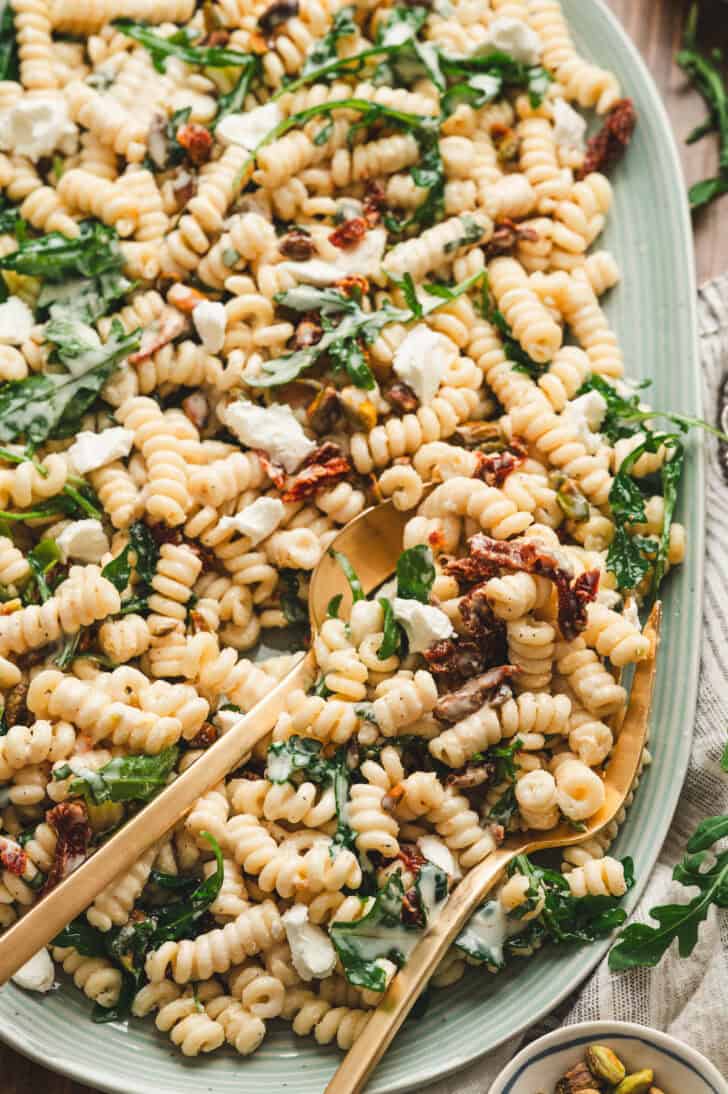
by This Goat Cheese Pasta Salad stays creamy instead of drying out in the fridge, thanks to a simple pasta water technique. Fresh arugula, lemon, sundried tomatoes and pistachios make it feel a bit elevated, while still being easy enough for cookouts, lunches and summer dinners.
Save This Recipe!
“Liked this a lot! Made it with GF pasta and was great.”
—Sarah
The Goat Cheese Pasta Salad That Gets Better In The Fridge
You know how a lot of pasta salads start out creamy and delicious, then turn dry and kind of sad after a few hours in the refrigerator? This one doesn’t.
The difference comes down to technique. Instead of stirring crumbled goat cheese into cold pasta and hoping for the best, we use hot pasta water to emulsify some of the goat cheese into a smooth, tangy dressing that actually clings to the noodles (and then we add even more crumbled goat cheese later). We also reserve part of the dressing and toss it in right before serving so the salad stays creamy instead of soaking everything up overnight.
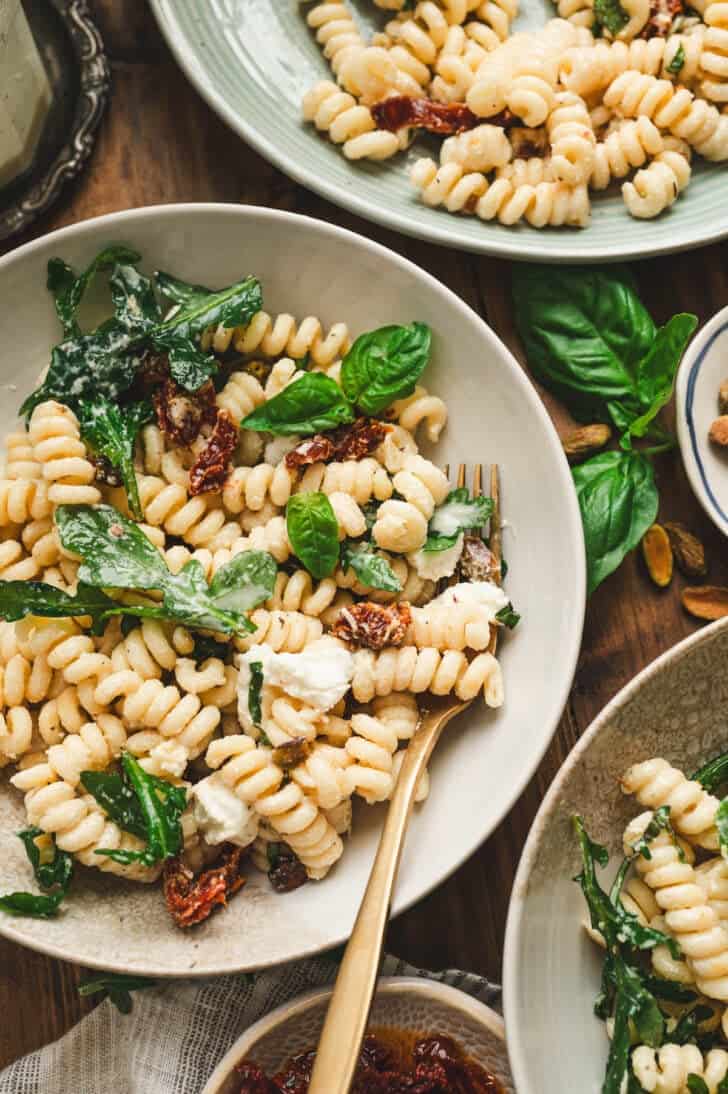
This pasta salad with goat cheese lands somewhere between a cookout side dish and a light summer dinner. The arugula keeps it fresh, the pistachios add crunch, and the sundried tomatoes bring a concentrated savory sweetness that works so well with tangy goat cheese.
And yes, this absolutely counts as meal prep if you’re the kind of person who needs a workweek lunch that isn’t another turkey sandwich.
Why You’ll Love This Pasta Salad With Goat Cheese
- The goat cheese melts into the dressing, which gives every bite a rich texture without needing mayo.
- Reserving part of the dressing for the end keeps the pasta salad from drying out in the refrigerator, which is one of the biggest problems with make-ahead pasta salads.
- Arugula, pistachios and sundried tomatoes give this lemon arugula pasta salad a lot more texture and flavor contrast than most one-note pasta salads.
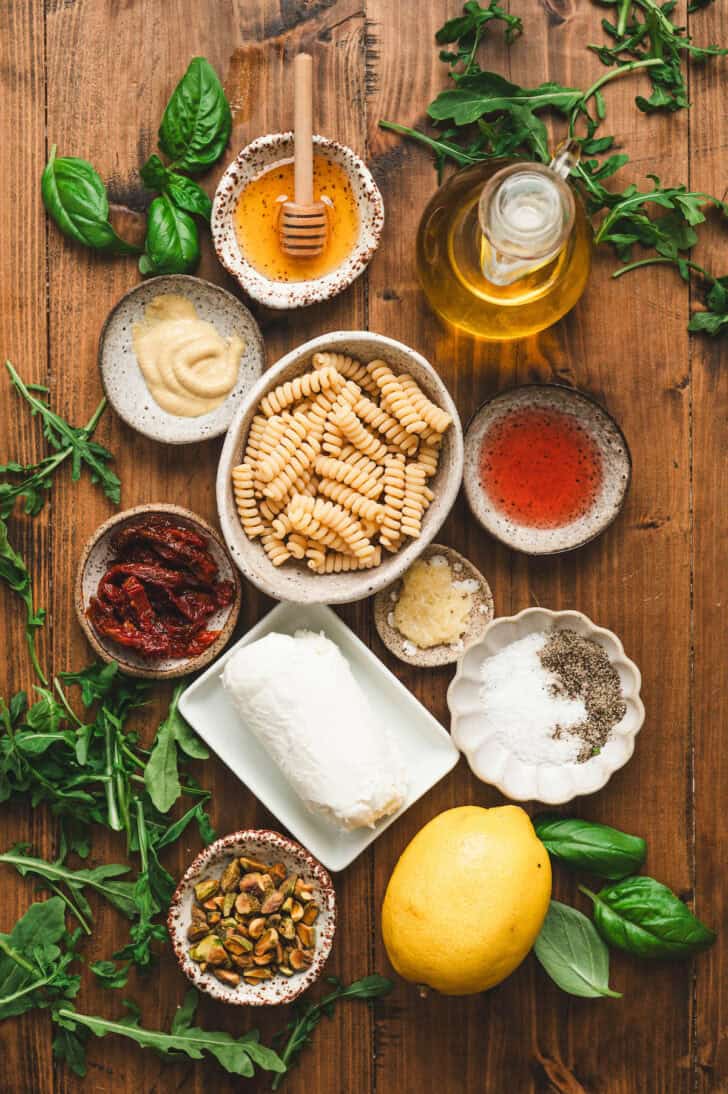
Arugula Pasta Salad Ingredients
A full recipe card, including exact ingredient amounts, appears at the bottom of this post.
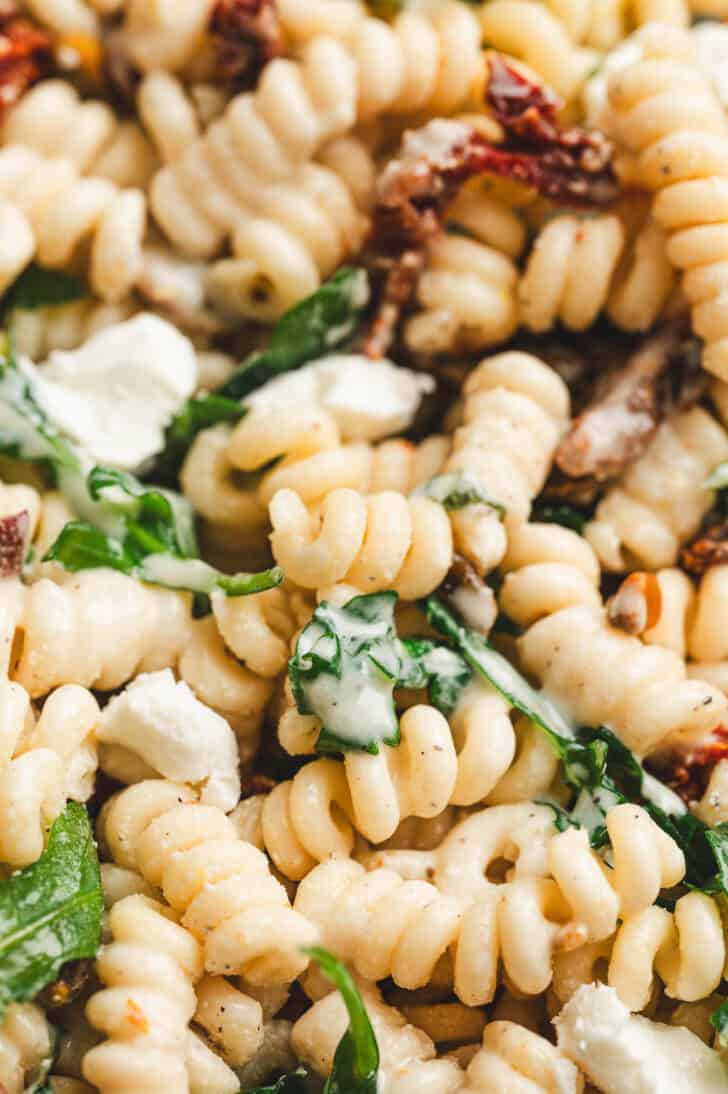
- fusilli pasta – we tested this recipe with several short pasta shapes, and fusilli consistently worked best because all those twists grab onto the creamy goat cheese dressing. The unique shape of fusilli seen in these photos is called “fusilli bucati,” which we have found in both the De Cecco brand, at Target under their Good & Gather brand. Traditional fusilli, rotini or cavatappi all work well here, so no need to stress about a particular pasta shape.
- goat cheese – you’ll use most of the goat cheese in the dressing itself, where it melts into the warm pasta water and creates a smooth, tangy sauce. Reserve a little for crumbling over the top right before serving so you still get pockets of fresh goat cheese flavor.
- garlic – just one small clove gives the dressing savory depth without overpowering the other flavors. A microplane works best here so the garlic disappears smoothly into the dressing
- olive oil, red wine vinegar, Dijon mustard and honey – this combination builds the tangy, creamy dressing that is stable enough to coat the pasta instead of sliding off into the bottom of the bowl. The tiny bit of honey balances the sharpness of the goat cheese and lemon.
- lemon juice and lemon zest – the juice adds acidity and the zest reinforces it. Always zest the lemon before juicing it. Future you will appreciate it.
- baby arugula – arugula turns this into more of an arugula pasta salad situation instead of just another creamy noodle salad. Its peppery flavor works well with goat cheese.
- sundried tomatoes – oil-packed sundried tomatoes add concentrated sweet-savory flavor and chewy texture. They also help this sundried tomato pasta salad recipe feel a little more substantial.
- pistachios – pistachios stay crunchier than softer nuts once chilled, and their flavor works really well with lemon and basil.
- basil – fresh basil ties everything together and keeps the salad tasting fresh, even after a night in the refrigerator.
How To Make Goat Cheese Pasta Salad
- COOK. Bring a medium pot of salted water to a boil. Add the pasta and cook according to package directions for al dente. Before draining, reserve 1/4 cup pasta cooking water.
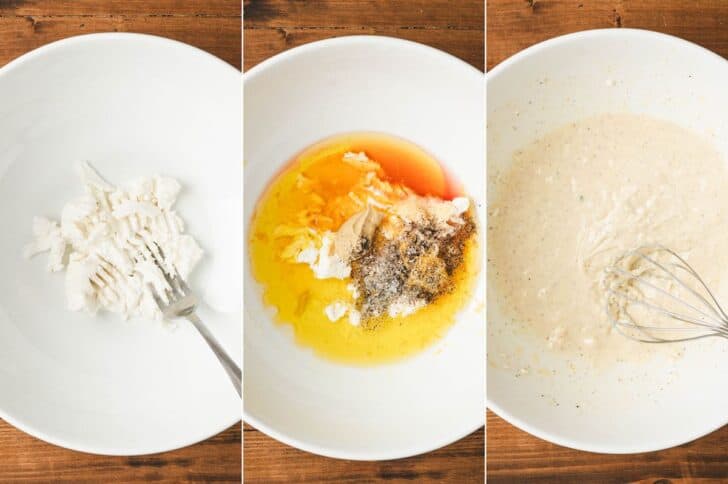
- WHISK. Meanwhile, crumble 3/4 of the goat cheese into a large bowl. Add the garlic, olive oil, lemon juice, vinegar, mustard, lemon zest, honey, salt and pepper and whisk until combined.
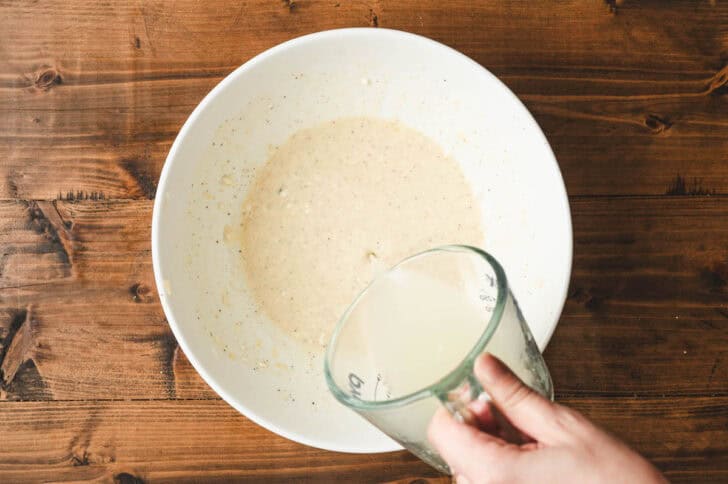
- EMULSIFY. Add the reserved pasta water to the dressing and whisk until creamy and smooth. It will seem a little loose at first, but the pasta will absorb some of the dressing as it chills. Transfer about half of the dressing to a small bowl and refrigerate.
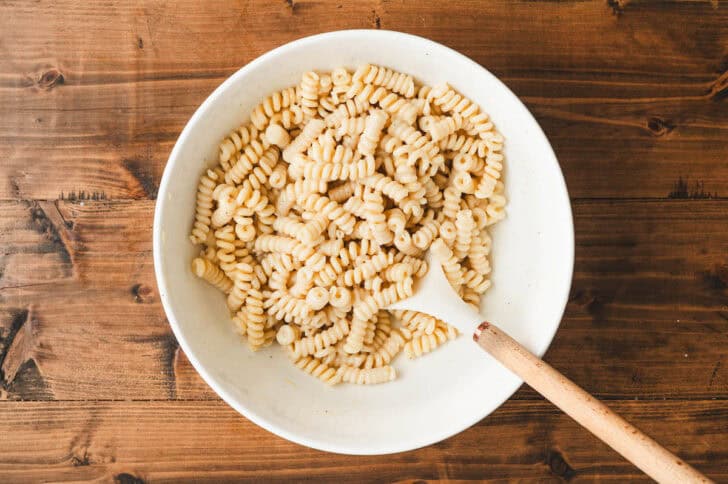
- TOSS. Drain the pasta and immediately add it to the bowl with the remaining dressing. Toss thoroughly so the warm pasta absorbs all that creamy goat cheese goodness.
- CHILL. Refrigerate the pasta salad at least 1 hour or up to 3 days. Refrigerate the reserved dressing and remaining goat cheese separately.
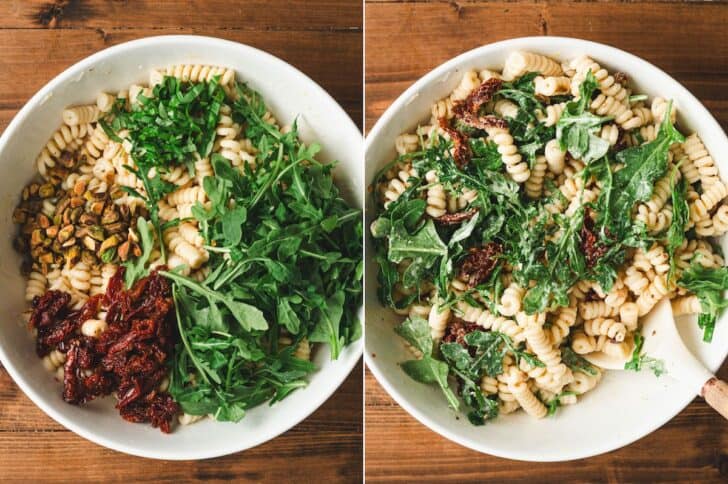
- FINISH. Just before serving, add the arugula, sundried tomatoes, pistachios, basil and reserved dressing. Toss gently, then crumble the remaining goat cheese over the top.
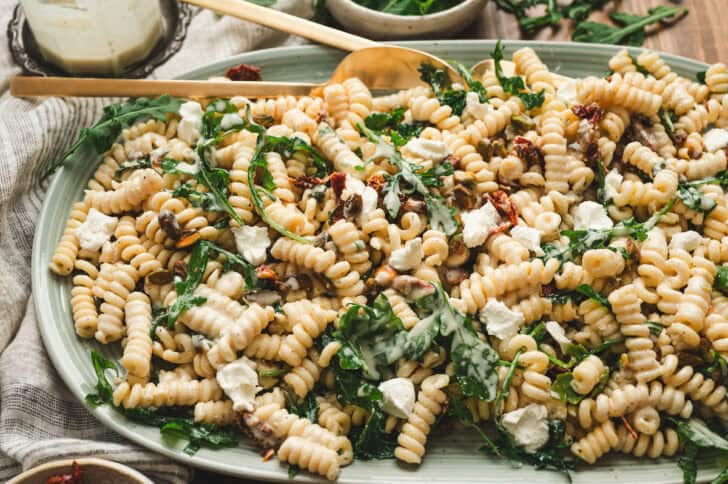
Goat Cheese Pasta Salad Home Chef Tips
- Don’t panic if the dressing seems thin right after adding the pasta water. Pasta absorbs dressing as it chills, so a looser dressing upfront keeps the finished salad creamy instead of dry.
- Add the arugula right before serving if possible. That way, it stays fresh instead of wilting into the pasta.
- Salt your pasta water aggressively. The dressing has a bright, tangy flavor profile, so the pasta needs to be seasoned properly to balance that.
- If the pasta salad has been refrigerated overnight, let it sit at room temperature for about 15 minutes before serving. Goat cheese firms up quite a bit when cold.
Sundried Tomato Pasta Salad Variations
- MIX AND MATCH VEGGIES – We’ve tested this pasta salad with everything from asparagus and tomatoes (which you may remember from a previous version) to this version with peppery arugula and sundried tomatoes, and honestly, this newer version is the one we keep making on repeat. But the recipe is flexible enough to adapt to whatever vegetables you have hanging around in the fridge.
- ADD CHICKEN – grilled or rotisserie chicken turns this into a really solid summer dinner instead of just a side dish.
- SWAP THE GREENS – baby spinach works if you don’t love the peppery bite of arugula.
- USE TOASTED WALNUTS – walnuts give the salad a slightly earthier flavor than pistachios.
Make Ahead And Storage
- Make Ahead: Prepare the pasta and dressing as directed and refrigerate separately up to 3 days. Add the arugula, pistachios, basil and reserved dressing just before serving for the best texture.
- Refrigerate: Transfer leftovers to an airtight container and refrigerate up to 3 days.
- Freeze: Freezing is not recommended. The goat cheese dressing can separate after thawing, and the arugula loses its texture completely.
More Foxes Love Lemons Favorites
Goat Cheese Pasta Salad
Save This Recipe!
Ingredients
- 8 ounces dried fusilli or other short pasta
- 1 log goat cheese (4 ounces)
- 1 small garlic clove very finely grated (or 1/2 teaspoon garlic paste)
- ¼ cup olive oil
- 2 tablespoons fresh lemon juice from about 1 lemon – be sure to zest it first
- 1 tablespoon red wine vinegar
- 2 teaspoons Dijon mustard
- 1 teaspoon grated lemon zest
- 1 teaspoon honey
- 1 teaspoon kosher salt plus additional for cooking water
- ¼ teaspoon ground black pepper
- 1 cup lightly packed baby arugula
- ⅓ cup oil-packed sundried tomatoes drained and thinly sliced
- ¼ cup shelled pistachios roughly chopped
- 2 tablespoons thinly sliced fresh basil
Instructions
- Bring medium pot of salted water to a boil. Add pasta and cook according to package instructions for al dente (see Step 3 before draining).
- Meanwhile, place 3/4 of log of goat cheese in large bowl and use fork to crumble it. Add garlic, oil, lemon juice, vinegar, mustard, lemon zest, honey, salt and pepper and whisk until well combined.
- Just before draining pasta, transfer 1/4 cup pasta cooking water to bowl with dressing and whisk until creamy and emulsified. It will seem a little thin at this point – this is OK. Transfer about half of the dressing to a small bowl and refrigerate.
- Drain pasta and immediately add to bowl with remaining dressing; toss until well combined. Refrigerate at least 1 hour or up to 3 days, along with remaining 1/4 of log of goat cheese.
- Just before serving, add arugula, sundried tomatoes, pistachios, basil and reserved dressing to pasta and toss gently to combine. Crumble remaining goat cheese over salad and serve.

Love this recipe, but didn’t it used to have asparagus in it? I’ve had it saved for years. It’s one of my family’s favorites.
Hi Kara! You’re remembering correctly! I periodically revisit older recipes and retest them, and sometimes I make changes to improve the flavor, technique or ingredients based on how I cook today. Asparagus was in an earlier version of this recipe, but I ultimately preferred the updated version without it.
I’m so glad to hear it’s been a favorite of your family for so many years! If you loved it with the asparagus, there’s absolutely no reason you can’t keep adding it. I also keep copies of my older recipes, so if you’d ever like the original version you remember, just let me know and I’d be happy to send it to you.
Thank you, Lori! I would absolutely love a copy of the original.
Liked this a lot! Made it with GF pasta and was great (just don’t chill it/ rinse as it toughens the gf pasta. I added a handful of a mixture of finely chopped, mint/basil and parsley at the end. It was really nice! I added the chopped asparagus when 2 minutes left of pasta cooking but make sure you take out 1/4 c of pasta water before (don’t want the asparagus taste!!)
I love to hear that, Sarah! Love the addition of herbs at the end. Yum!
Hi Ron! Thanks for the feedback. Did you salt your pasta cooking water? And when you say “lacking seasoning,” do you mean just salt, or do you wish it had some other type of seasoning?
Finally!! A pasta salad that is not Italian-flavored. This one sounds absolutely wonderful, so I will find an excuse to try it. Your pasta salad tip makes real sense. My husband does one with hard-boiled eggs, celery & onion, all bound together with mayonnaise. He always does it a day ahead, and then ends up adding more mayo because the pasta has soaked it all up. His will probably always be my favorite, but your recipe I’m sure will be right up there next to my husband’s. 🙂
Yes! I get tired of the “classic” Italian pasta salad. Your husband’s pasta salad sounds great. It’s kind of like the ingredients of a typical potato salad (eggs, celery, onion) in a pasta salad. Definitely tell him about reserving half the dressing and stirring it in at the end. I read about it somewhere else on the internet and I’ll always do it now. I like it because you don’t have to stir in additional mayo/sauce before serving. It’s the same amount you would normally use, but it seems like more, since the noodle don’t soak it ALL up when they’re warm.